
October 7, 2026
764 – The Online Preditors
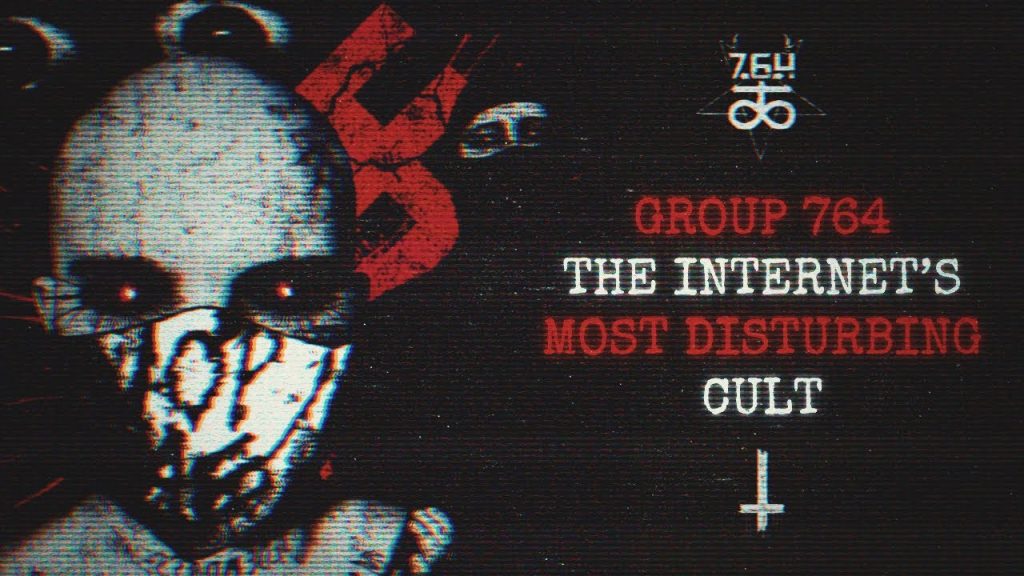


A teenager in Malmesbury, a network on three continents, and a question for every parent
What 764 and The Com are, what South African police have actually said, and what to do tonight if something about your child’s online life doesn’t sit right.
On Monday, 17 August 2026, South African police moved in on a target in Malmesbury, a Swartland town north of Cape Town. They were not following a local tip. They were acting on information that had travelled from Washington: a lead from the FBI, the US Embassy and the National Center for Missing and Exploited Children (NCMEC) that pointed at a target believed to be sitting in South Africa.
The person they arrested was 16 years old.
That detail is the one I keep coming back to. When we picture the people who hurt children online, we picture a faceless adult in a distant country. This case, and a worrying number like it around the world, is stranger and closer to home. The alleged offender is a teenager. So are many of the victims. And the whole thing allegedly ran through the same phones, apps and gaming accounts that our own kids are holding right now.
What the police have said so far
SAPS says its National Serial and Electronic Crime Investigations (SECI) team led the operation, with help from the Head Office Occult Unit, the Paarl Family Violence, Child Protection and Sexual Offences unit, K9 and crime scene units, and agents from the FBI and Homeland Security Investigations. A first look at the devices reportedly turned up recordings of child sexual abuse and of animal mutilation.
According to Daily Maverick, which saw the court details, the teenager faces eleven charges. Seven relate to sexual offences, including the sexual exploitation of children and distributing child abuse material. There are also animal cruelty charges and a charge over a message threatening damage to property. SAPS has said several child victims have been identified.
The latest update came last week. After 30 days of psychiatric observation at Valkenberg Hospital, the teen was found fit to stand trial, with assessors finding no mental illness or intellectual disability.
A fairness note. These are allegations. The accused is a minor, nothing has been proven in court, and his identity is rightly protected. Our interest is in the pattern, not the person.
So what is 764?
Strictly speaking, 764 is a name, not a company. It comes from the first digits of a Texas postcode, where the first group was reportedly started around 2020 by a boy of fifteen who is now serving a very long prison sentence (that detail is from Daily Maverick, citing FBI-backed reporting). Since then the original group has splintered, renamed itself and spawned copies. Investigators now use “764” as a family name for a whole cluster of violent online communities.
What ties them together is not a headquarters or a rulebook. It is a shared appetite: status inside the group is earned by controlling, humiliating and harming other people, especially children. The FBI has said it is looking at more than 450 people across the United States in connection with these networks. Two men described by US prosecutors as leaders were arrested in 2025. Arrests like these matter, but investigators describe a structure that was never built around a single leader, which makes it hard to switch off.
And The Com?
If 764 is one dark neighbourhood, The Com (“the Community”) is the city around it. Europol and the FBI use the name for a loose, mostly English-speaking ecosystem of young people, mainly teens and people in their early twenties, who meet on gaming platforms, chat apps, social media and even music-streaming services. It has no leader. It has a culture.
The FBI sorts the activity into three branches that overlap constantly. Hacker Com is about intrusions, account takeovers and ransomware links. In Real Life Com is about physical intimidation, swatting and violence. Extortion Com is about pressuring children, particularly girls, for material that is then used against them. A member can drift from one to another. What they share is that prestige comes from escalation: the more shocking the act, the higher the standing.
Europol takes it seriously enough to run a dedicated programme, Project Compass, launched in January 2025. Its first public results, announced in late February 2026, were 30 arrests, 179 people fully or partly identified and up to 62 victims identified, four of them safeguarded. In July, Europol and nine EU countries flagged 4,340 extremist web addresses for removal. Officials are candid that this is a start. The same release said a lot of perpetrators remain at large and many victims are still waiting for help.
How a child ends up in this
I want to be careful here, because I do not want this page to read like a manual. What investigators describe is not clever. It is patient, and it relies on human needs that every teenager has: to be liked, to belong, to be taken seriously.

Someone friendly turns up in a game lobby, a Discord server or the comments under a video. They are funny. They listen. They sometimes pose as another teenager. Over days or weeks, the child starts to feel understood by them in a way they don’t at home. Then comes a request, usually small and usually private. Once something embarrassing exists, the tone changes. The friend is now the one holding the leverage, and the child is too ashamed, and too scared of losing their phone, to tell anyone.
This is why I say the single most protective thing you can build is a household where telling the truth is cheaper than hiding it. The FBI’s own advice to parents lands in the same place: make sure your child knows they are not in trouble for asking for help.
What to watch for
No single sign proves anything. Teenagers are moody, private and chronically online by default. What law enforcement asks parents to look for is a change, or several changes landing together:
- Sudden shifts in mood, sleep or eating, or a child who becomes withdrawn or jumpy around their phone.
- A new online “friend” they are secretive about, or who they have been asked to keep secret.
- Changes in how they dress or look, including covering up in warm weather, or unexplained marks or injuries.
- Cruelty or sudden unusual behaviour towards pets or younger siblings, which the FBI specifically flags.
- Gifts, gaming currency or in-game items from someone you do not know.
- New accounts, a second phone, or a rush to wipe messages.
- Fear, anger or panic after receiving a message, followed by unusual requests for money.
Where it started matters less than how it develops. A chat that began on a mainstream platform and has moved to a private group or an app you have never heard of deserves a calm conversation.
If you are a teenager reading this
This part is for you, and I will keep it short and direct.
If someone you met online is asking you for pictures, for secrets, or for something that makes your stomach drop, that is not a friend. It does not matter how long you have been talking or how much they seem to know about you. A real friend does not threaten you.
If you have already sent something, or done something, you are not ruined and you are not the one in trouble. The person pressuring you is the one committing the crime. Threats get louder because they are working. They almost always collapse when an adult steps in.
Tell one adult. A parent, an aunt, a teacher, a school counsellor. If that feels impossible, call Childline on 116, free, and talk to someone who has heard it all before.

If it is already happening
These are the steps I would give a friend. Slow down, because panic is what the other side is counting on.
1. Don’t comply and don’t pay
Complying does not end it. The FBI says the same about paying. Each concession usually brings the next demand.
2. Keep the evidence, but not by sharing images
Keep usernames, account links, dates and screenshots of the messages themselves. Do not forward, save or re-send any explicit image of a child, including the child’s own, even to “prove” something. In South Africa, possessing and distributing it is an offence. Tell the investigator the material exists and let them tell you how to hand it over.
3. Report it
Go to the police and ask for the Family Violence, Child Protection and Sexual Offences unit. You can also report to the Film and Publication Board hotline. The platform itself should be told as well, and you can then block the account after you have captured what you need.
4. Get the child support, not a lecture
A child who has been through this needs safety first. Consequences can wait. If there is any mention of self-harm, call SADAG straight away.
| FPB Child Protection Hotline | 0800 148 148 hotline@fpb.org.za | fpb.org.za/child-protection |
|---|---|
| SAPS Crime Stop | 08600 10111 For immediate danger, call your local police station or 10111. |
| Childline South Africa | 116 (toll-free) Counselling for children and parents. |
| SADAG crisis line | 0800 567 567 If a young person is talking about self-harm or suicide. |
| Take It Down (NCMEC) | takeitdown.ncmec.org Helps remove explicit images of under-18s from taking further hold online. |
A few things I would do this week
Not as a punishment and not as surveillance, but as a family:
Sit down together and go through which apps and games they use and who they talk to, the way you would ask about their friends at school. Switch on the strictest privacy settings on every account, and turn off messages from strangers wherever the platform allows it. Agree that nobody in the house, you included, sends a photo they would not want seen by the whole school. And agree on a code: one word your child can text you that means “come and get me, no questions”.
Read and watch
South African coverage
- Daily MaverickThe deepest South African read: the Malmesbury charges, the network’s history, and how it moved from the US to the rest of the world.
- Jacaranda FMQuotes the SAPS statement on the operation and the units involved.
- Joburg ETCA clean summary of the arrest and what SAPS says 764 is.
- allAfrica (citing EWN)The newest development: the Malmesbury accused has been found fit to stand trial.
The international picture
- FBI public alertThe primary source on these networks: who they target, how, and what families should do.
- NBC Palm Springs, 13 Sept 2026Latest FBI message to parents, including more than 450 people under investigation and the line that children should hear: you are not in trouble for asking for help.
- Atlanta News FirstShows the offline spillover: graffiti, animal cruelty and bomb threats tied to the network in one American city.
- ABC NewsA family speaks about losing their 13-year-old son. Heavy, but important context.
- US Department of JusticeThe charges against two alleged 764 leaders.
The Com and Europol
- Help Net SecurityEuropol’s first results from Project Compass: 30 arrests and 179 people identified across 28 countries.
- CyberScoopExplains the three branches of The Com the FBI describes: Hacker, In Real Life and Extortion.
- Lovguiden (Europol release)July 2026: Europol and nine EU countries flag 4,340 extremist web addresses for removal.
- CyberScoopWhy officials say expectations for beating The Com need to be realistic.
Videos worth your time
Some of these items discuss suicide, abuse and violence, and a few include interviews with grieving families. Watch on your own first before deciding whether to share with a teenager. Video descriptions above are based on the publishers’ own summaries. Facts about the Malmesbury case are drawn from SAPS statements as reported by Daily Maverick, Jacaranda FM, Joburg ETC and EWN, and may change as the case proceeds. This article is general safety information from GuardianForge Cyber Security and is not legal advice. If a child is in immediate danger, call 10111.